While this year’s planting season is winding down, it’s never too early to start thinking about how to succeed next year. Thanks to readily available technology and exciting new practices in the farming industry, many growers are turning to drones for the first time.
Although they might sound futuristic, drones have become popular in the farming industry. Drones started strong in the agricultural sector – leading drone manufacturer DJI valued the drone agricultural market at about $75 million during the launch of the first agriculture drone back in 2016.
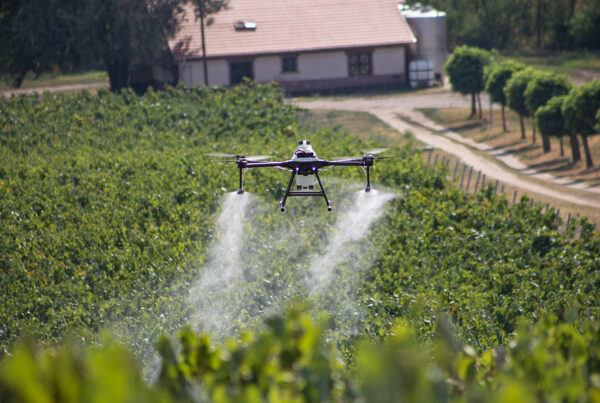
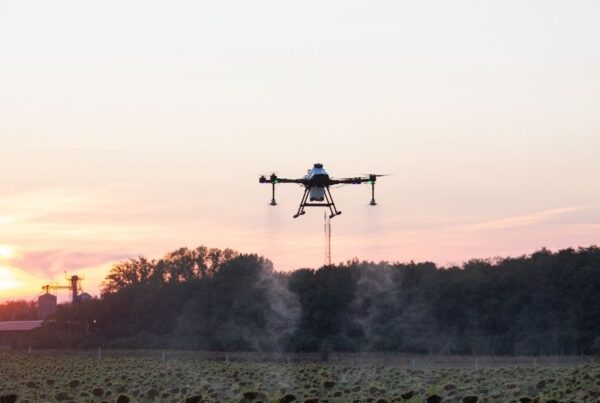
Ideal for collecting aerial crop data, providing targeted spraying, and cutting down on the time and investment involved with new crop planning, drones are a total solution for the farming industry. Drones can also be utilized for field checks, to track and monitor annual growth progress, pest control, spot spraying, education, and more.
Are you interested in implementing them into your fields? Here’s what you need to know.
First Things First – Getting the Right Drone
You can’t plow a field with a Tonka truck. That analogy should go a long way toward helping you understand precisely how important it is to make sure you have the right drone for the job. If you’re new to the world of drones, though, choosing the right one can be tricky.
After all, there are dozens of different models out there, many of which feature advanced sensors, mapping capabilities, thermal imaging features, and more. Which features do you need, and what can you afford to bypass? It can be a difficult question to answer.
As a general rule, you can’t “build up” a drone by adding new accessories and software. As a result, you want to select a drone that will work for your team both now and in the future.
To achieve this, we recommend laying out precisely what you want to accomplish with your field plan, and from there, find your needs. It’s essential to pick the right drone that will be able to give you the data you need and really help improve your yield. For example, if you want a drone to facilitate accurate corp surveying, look into popular options like the DJI Mavic 2 Pro.
With such a massive array of options in the agriculture field, If you have specific questions about which drone is ideal for your application, feel free to contact our Enterprise drone experts. They’ll walk you through our selection and help you understand which model will be best for your job.
6 Tips to Make Your UAV Implementation as Successful as Possible
In 2018, 33% of farmers were using drones. If you’d like to be one of them, we recommend you set yourself up for success by following these drone use tips:
1. Define Expectations
Drones have many functions, and you’ve got to decide what you intend to use yours for before you introduce something new to your program. For example, are you most interested in drones for their mapping capabilities? If so, you should know that not every single map your drone produces is going to be high-quality and useful.
Lots of drone maps will give you the information you already have about your fields, such as spots of damaged ground or waterlogged areas. Instead of tossing out the idea of using UAVs entirely, though, get targeted with how you intend to use your drone.
The more you fly, the better you’ll get at collecting information. And the more you use your drone, the more familiar you will become with its unique features and application to your farming operation. While you may “know” your field, you can use multispectral cameras and other equipment to uncover additional information, like the actual health and values of your soil, or your overall crop growth rate.
2. Fly Early, Fly Often
Unless you’re bringing in a specialized operator to fly your drone for you, there will be a learning curve associated with getting your new UAV up in the air. Fortunately, practice makes perfect. With this in mind, plan to fly your drone as much as possible. One of the great benefits of drones is that they are inexpensive to operate.
This means that you’re not dumping a tremendous amount of money down the drain every time you have a subpar flight. Because of this, you have plenty of time and space to get comfortable with your drone’s new features. You also have time to ensure you’re operating it expertly and safely when the time comes.
If you need help learning to fly your drone, contact our team. We can provide on-site training or even recommend a company to visit your farm and offer specialized training.
3. Add Necessities
Like a tractor or plow, there are a few key components that you will need to have onboard to get the results you need. Spare batteries, post data processing, and the right cameras will make sure you utilize the drone’s capabilities for your crops.
Spare batteries, for example, are essential in keeping you flying. Whether it’s an acre or one hundred hectares, having extra batteries will ensure that you can start and finish the project at hand.
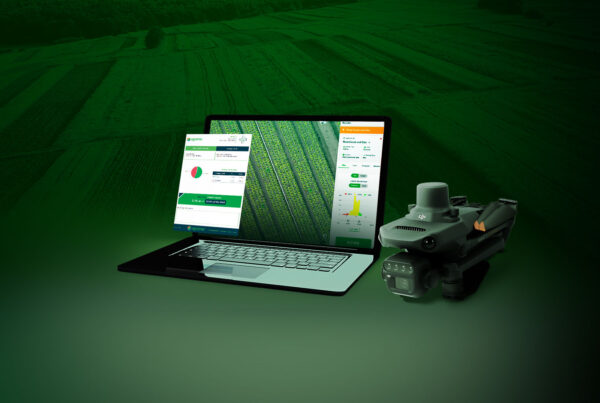
Mapping software is also crucial for your crops, especially with all the data that is collected on your fields. With all of this data, you need to be able to process the info and build an orthomosaic map to be able to get the crop health values.
Finally, the right camera will help you collect the data that is critical for you and your crops. We carry everything from multispectral cameras that check crop health to high-resolution cameras that can build clean 3D maps and models for you.
4. Get Educated
It’s essential to understand the full scope of your drone’s capabilities before you start flying it. Because of this, you will want to get the right resources from our partners that we work closely with!
If at all possible, have somebody to teach you how to fly the Drone in real life. The more you know about your new model, the more capable you will be of taking advantage of all of its features and ensuring it works as hard as possible for you. If there are special considerations that accompany your new drone, be sure that you understand these at the time of purchase.
5. Pick up Some Troubleshooting Skills
If something goes wrong during a flight or in the field, it’s critical that you know how to troubleshoot it. Because of this, it’s crucial to gain as much education as possible about your new drone. Luckily, our team offers troubleshooting and support – so you’re never in it on your own.
If you’ve invested in a high-level Enterprise model for extensive mapping and imaging, hire an expert to run the drone for the first couple of weeks while you learn the ins and outs. This investment will be invaluable in your ongoing use of the drone.
6. Look to Software for Extended Functionality
As your capabilities expand, your demands on your drone likely will, as well. Don’t assume that you have to replace your model, though.
Instead, look to software like Drone Deploy 3D Mapping to expand the capabilities of your existing model and ensure that you’re getting everything you need from your UAV.
Expand Your Operation With UAVs
Drones have become a widely used technology in the farming industry in recent years. If you are interested in adding UAVs to your farming operations, trust that the transition is within your reach. With a few simple steps and some basic knowledge, you, too, can take advantage of a powerful, intelligent drone to simplify and streamline your operations. Ready to find the perfect match? Shop our selection now.