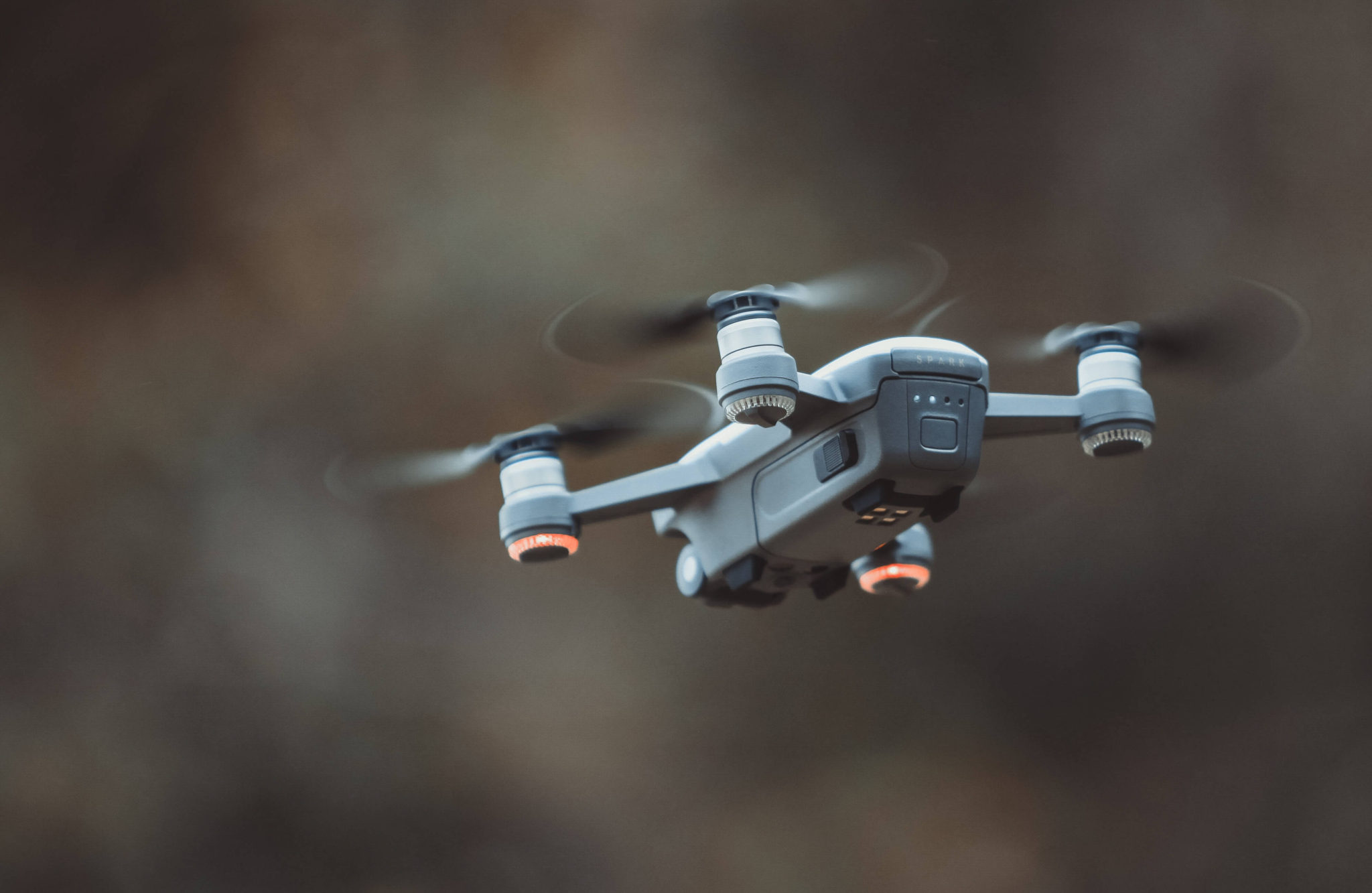
When it comes to drone flight, collisions are one of the biggest risks. Not only can drones turn into stationary objects, like trees and electrical lines, but they can turn into one another. According to the Federal Aviation Administration (FAA), drones that collide with manned aircraft cause more structural damage to that crewed aircraft than other objects, like birds, traveling at the same impact speed.
While drone collisions are a fact of life, there are ways to reduce the likelihood of collisions and protect yourself and your drone equipment in the process. One of our favorite tips? Install Lume Cube’s anti-collision strobe lights.
Here’s what you need to know.
How the Strobe Works
The Strobe was designed to satisfy all FAA guidelines for anti-collision lighting and is lightweight without sacrificing power. The Strobe, which affixes to the top of your drone, is visible from more than three miles away.
Each strobe has a battery life of 6 hours on fast strobe and can flash red, white, and green. The lights are visible 360º and feature multiple light mode settings, including a strobe speed of 1Hz, or 60 strobes per minute.
Weighing only 10 grams, the Strobe will not impact the agility of your drone, or change your flight experience. Additionally, the strobe attaches simply to your drone using 3M Dual Lock Technology so that it won’t damage your drone’s surface.
4 Smart Ways to Avoid Drone Collisions
In addition to making your drones more visible with Lume Cube’s anti-collision lights, here are a few ways to keep your drone safe and avoid airborne collisions:
1. Check Your Rotors
The rotors of your drone are like the tires of your car: they’re responsible for propelling and directing your drone. Despite their essential purpose, though, they’re somewhat fragile, and can easily bend out of shape with a few decent bumps.
When they do, they make it difficult to control your drone accurately. With this in mind, be intentional about checking your rotors before a flight to be sure they’re straight.
2. Tune Your Compass
Incorrectly tuned compasses are a leading cause of drone crashes. Bear in mind that drone compasses can be de-tuned as a result of radiofrequency, so it’s essential to keep the drone away from magnets and magnetic signals, including those in cell phone towers and high voltage power lines.
3. Limited GPS Signal
If you’re flying the drone indoors, such as at a stadium, your GPS signal will be weak. With this in mind, fly in open areas and away from tall buildings whenever possible. You should also keep a close eye on your GPS signal at all times.
4. Disconnected Video Transmission
The FAA requires you to keep your drone within sight at all times:
If you use First Person View or similar technology, you must have a visual observer always keep your aircraft within unaided sight (for example, no binoculars). However, even if you use a visual observer, you must still keep your uncrewed aircraft close enough to be able to see it if something unexpected happens.
To ensure you’ve always got eyes on your drone, check all video cables, ports, and connections before each flight.
Get the Accessories You Need Now
Mastering the art of safe drone flight is a process. Fortunately, we carry all the accessories, sensors, and video products you need to get off the ground safely. Ready to learn more? Contact our team or shop our extensive selection now.