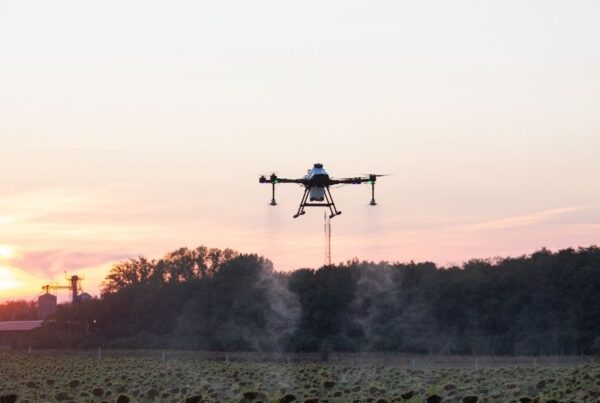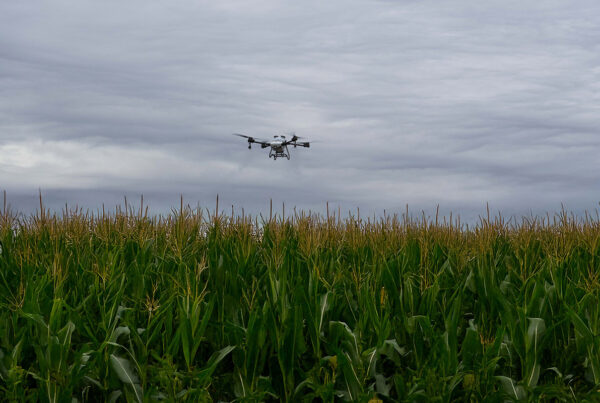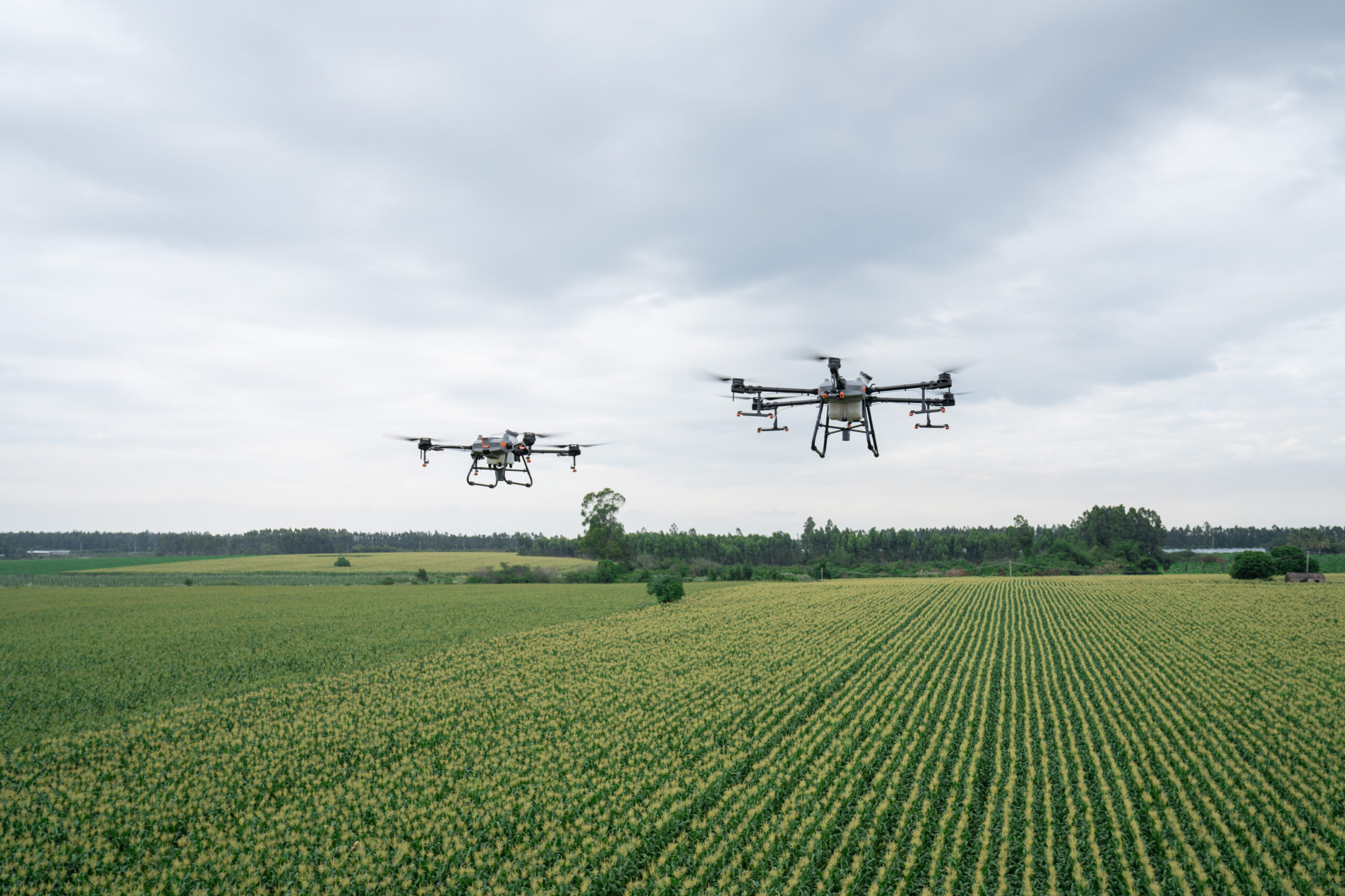
Farmers who use drones to apply substances scientifically find them effective, convenient.

Aerial spraying no longer means renting the services of crop dusters and their airplanes or a helicopter and pilot. Instead, agricultural drones give farmers more control over their fields, crops, time, finances, and success through better crop management.
Dronenerds.com offers DJI Agras series agricultural drones, which are capable of sophisticated aerial spraying. Applying substances with a DJI drone is the final step in smart-farming practices made possible by acting on aerial data. This scientific approach, called Smart Farming, boosts yields, improves crop quality, and reduces costs. Drone spraying is based on real-time data, not historical parameters or outdated information that changes over time.
Farmers Gain Control with Agras
The window for applying substances is often a small one. The threat of disease spreading rapidly or weather that hinders plane or helicopter flights can shut the window quickly. Farmers with spray drones, however, don’t have to wait. They don’t have to worry about the availability of the pilots or their manned aircraft.
Agras sits ready, awaiting deployment. Farmers or farmhands are the pilots. So, for example, when images from an infrared camera or multispectral indicate the presence of disease and eyewitness inspections confirm, say, a fungus, Agras can apply a fungicide within hours before the disease spreads. Prompt action can save a crop or even an entire orchard.
Spray drone setup is quick and straightforward. Automated flights are through proven computer programs. Takeoff and landing are vertical, so there’s no need for a runway. The bed of a pickup or a small, clear patch of field or farm lane works just fine.
Applications are thorough and effective, precisely metered and evenly dispersed. And because control is complete, spraying by drone is safe.
How Spray Drones Work
Agras drones don’t gather data on fields or crops. A drone that has, at the very least, NDVI capability should get that done. An economical Phantom P4 with an NDVI multispectral camera, for instance, can collect data for transfer to the Agras sprayer.
From the Phantom’s maps, the Agras flies a preprogrammed route over a field or fields. Programming also tells the Agras what it’s spraying and in what amounts.
Drones’ spraying tanks are a small fraction of the size of what’s on a manned aircraft — and the price of agricultural drones is a small fraction of what a manned vehicle costs. In the Agras T series, the drone’s name illustrates the size of the tank in liters; except for the Agras T10, which has an eight-liter tank:
- Agras T10: 8 liters.
- Agras T16: 16 liters.
- Agras T20: 20 liters.
- Agras T30: 30 liters.
Substance concentrates must be mixed with water before being poured into the spray tanks. Once substances are in the tank, the drone uses its program to order pressure from an onboard pump, sending substances through spray lines and specially designed auto-adjustable nozzles to disperse fungicides, herbicides, or nutrients.
Spray Drones’ Features:
Larger tanks: The bigger the tank, the greater the area the drone can spray on just one load. A bigger tank means fewer refills and less downtime during a day of spraying.
FPV camera: MG-1P drones have a built-in first-person view camera, so the operator can see where the drone is going.
Obstacle avoidance: Nothing enhances safety more than a drone’s ability to sense obstacles and avoid them.
Speed-adjusted spraying: If a drone with this capability speeds up or slows down, the amount of substances it disperses increases or decreases. That keeps the substance delivery uniform and safe.
Multi-drone management: Some Agras drones allow flight control of multiple drones from a single remote controller, speeding up spraying over large areas. Remember, the FAA must approve a Part 107 Waiver for the remote pilot in command to operate multiple aircraft simultaneously.
RTK: Real-Time Kinetics ensures the most precise drone positioning.
Water resistance: Higher IP ratings mean better protection against rain and other moisture, including residue from the spray. Agras drones have an IP 67 rating, at least for core modules and on newer models.
Adequate power: Spray drones may have up to eight rotors. Typically, the more rotors, the more powerful the drone and the more it can lift—the greater the lift capacity, the bigger the spraying tank that can be fitted. Equipped with six rotors and a 30-liter spraying tank, the Agras T30 has a spreading system payload capacity of up to 40kg, 16 nozzles, and a spray range of nine meters. These features enable the T30 to cover up to 40 acres per hour.
Radar: Onboard radar helps a spray drone maintain a safe and effective altitude. Radar is especially helpful in hilly terrain. It reads a field’s contour and changes the altitude of the drone automatically.
Developer-ready. A drone that is ready for developers will accept customized or third-party instrumentation to enhance performance for specific tasks.
Extended flight time: Spray drones typically have an 8- to 10-minute flight time on each charge. More-powerful battery options can lengthen that by about 20 percent.
Spray Drone Advantages
Spray drones can go when and where land-based sprayers and airplanes can’t. Mud might keep your land-based sprayer in the barn, but not your drone.
If a field adjoins another farmer’s land, or maybe even multiple farms, a plane won’t be able to fly over and release substances too near the neighbors. Sometimes plane flights can even affect your crops in an adjacent field when plants are incompatible with the substance. For example, a spray drone can slow down, even hover, and adjust the amount of substances it releases to correspond with its changing speed.
Cloud cover might ground a plane; a low-flying drone, however, usually can fly beneath clouds and complete work.
Drones cost less, too. A self-propelled ground sprayer can cost $50,000 to $85,000, even more. Self-propelled sprayers with 80- or 100-foot booms can cost more than a quarter-million dollars. A spray drone will cost a fraction of either type of ground sprayer.
Amortized over its life, a properly maintained drone sprayer should cost less than contracting out spraying. Although the drone system will cost more than a tow-behind sprayer, it will not have the fuel costs of anything ground-based. And you’re almost certain to spend less on maintenance for the drone than for big, complicated sprayers.
Dronenerds.com carries all the parts you need to maintain your Agras aircraft, and if you don’t want to do the work yourself, Drone Nerds also does repairs by mail.
Expert Advice and Reliable Help for the Right Equipment
Need help? Have questions? Contact Drone Nerds’ experts for answers and real-world drone solutions. We can hook you up with an Agras spray drone system that’s right for your farm and budget.