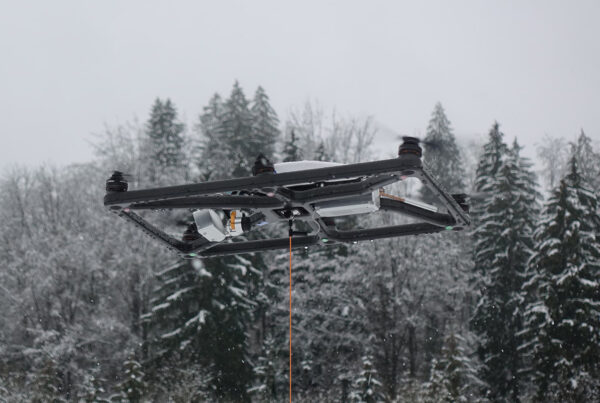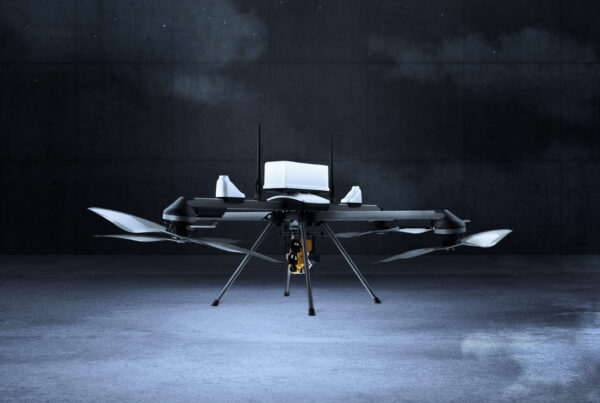
DBOX is an autonomous drone docking station designed to support remotely managed and automated drone operations. For public safety agencies, infrastructure operators, and security organizations, DBOX provides a stationed base for repeatable aerial missions, including incident response, search operations, perimeter monitoring, and situational awareness.
Why Autonomous Drone Docking Matters For Operational Teams
Today, public safety organizations use drones for operations such as inspections, incident response, perimeter monitoring, and situational awareness.
A manual drone deployment often depends on whether a trained pilot is available, how quickly the team can reach the site, and whether the aircraft is charged, configured, and ready for the mission. A docking station changes that workflow by giving teams a fixed launch and recovery point that can support automated or remotely managed missions.
For public safety agencies, this can support:
- Faster situational awareness for incident response
- Repeatable aerial monitoring from remote locations
- Scheduled patrols around high-priority areas
- Remote visibility over difficult-to-access terrain
- Reduced need to place personnel directly at every launch site
How DBOX Supports Public Safety and Government Operations
First Responder Agencies
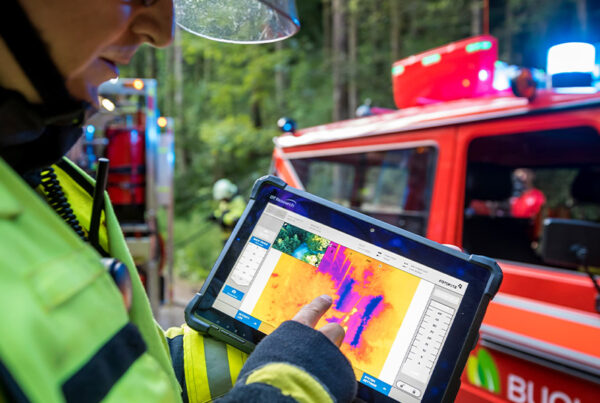
DBOX supports first responders as a docking station for automated or remotely managed launch from a fixed location. The system helps public safety teams assess incidents before personnel arrive on scene, with remote launch and real-time aerial visibility for calls involving traffic incidents, perimeter threats, search operations, and emergency response coordination.
Search and Rescue
For search operations, aerial visibility can help teams assess terrain, identify areas of interest, and coordinate response. DBOX includes incident response, area surveillance, search operations, and public safety monitoring, with visual intelligence delivered to command centers.
Critical Infrastructure and Perimeter Monitoring
Critical and strategic infrastructure use cases include military bases, energy facilities, airports, and government sites through continuous perimeter surveillance, intrusion detection, and actionable situational awareness.
Border Security
For border and remote perimeter zones, DBOX offers continuous monitoring, use with thermal and optical payloads, unauthorized crossing detection, movement tracking, and support for rapid response in hard-to-access areas.
What Should Teams Evaluate Before Deploying an Autonomous Docking Station
A drone docking station is part of a larger operational program. Before deploying DBOX or any drone-in-a-box system, organizations should evaluate more than the dock itself.
Key considerations include:
1. Mission Requirements
Start with the operational problem. Is the team trying to support emergency response, perimeter monitoring, infrastructure inspection, or routine patrols? The answer will influence dock placement, aircraft selection, payload requirements, software workflows, staffing, and approval needs.
2. Network and Data Requirements
DBOX PRT supports Ethernet, dual-SIM 5G access, and data transfer through physical USB, Wi-Fi, and 5G depending on version. Teams should confirm which connectivity model fits their environment, internal IT policies, and data handling requirements.
3. Weather and Site Conditions
DBOX PRT has an operating temperature from -32.8° to 122° F and weather sensors for rain, wind, temperature, and humidity. Site conditions still matter. Teams should evaluate landing zones, physical security, power access, line of sight considerations, communications coverage, and routine maintenance access.
4. Aircraft Compatibility
DBOX PRT is compatible with select Parrot platforms, including the Parrot Anafi UKR GOV. Teams evaluating DBOX should confirm that this aircraft fits their mission profile, operational requirements, and procurement needs before deployment.
5. Software Workflow
The docking station should fit into the way the team actually works. DBOX GCS (Ground Control Software) supports mission scheduling, security triggers, fleet management, automated data handling, system dashboards, manual override, geofencing, no-fly zones, and user roles. Those capabilities should be mapped to standard operating procedures, staffing plans, command-center workflows, and data retention policies.
6. Regulatory and Procurement Requirements
Autonomous and remotely managed drone operations may involve regulatory, procurement, airspace, privacy, data security, or internal policy requirements. DBOX’s capabilities and designations may be relevant for public safety agencies, but each organization should verify which requirements apply to its use case, jurisdiction, funding source, and procurement process.
What Is Included With The DBOX System
The DBOX PRT is designed as an integrated platform, not a standalone aircraft. The system includes a docking station, networking access, and DBOX Ground Control Software.
Key supported capabilities include:
- Remote Operations: Pilots can control the drone remotely from remote locations with internet access.
- Weather Resistance: The docking station provides a secure base intended to protect the drone from environmental conditions.
- Autonomous Charging: The drone docks and recharges on its own between missions.
- Secure Data Collection: Encrypted links and secure data handling end-to-end.
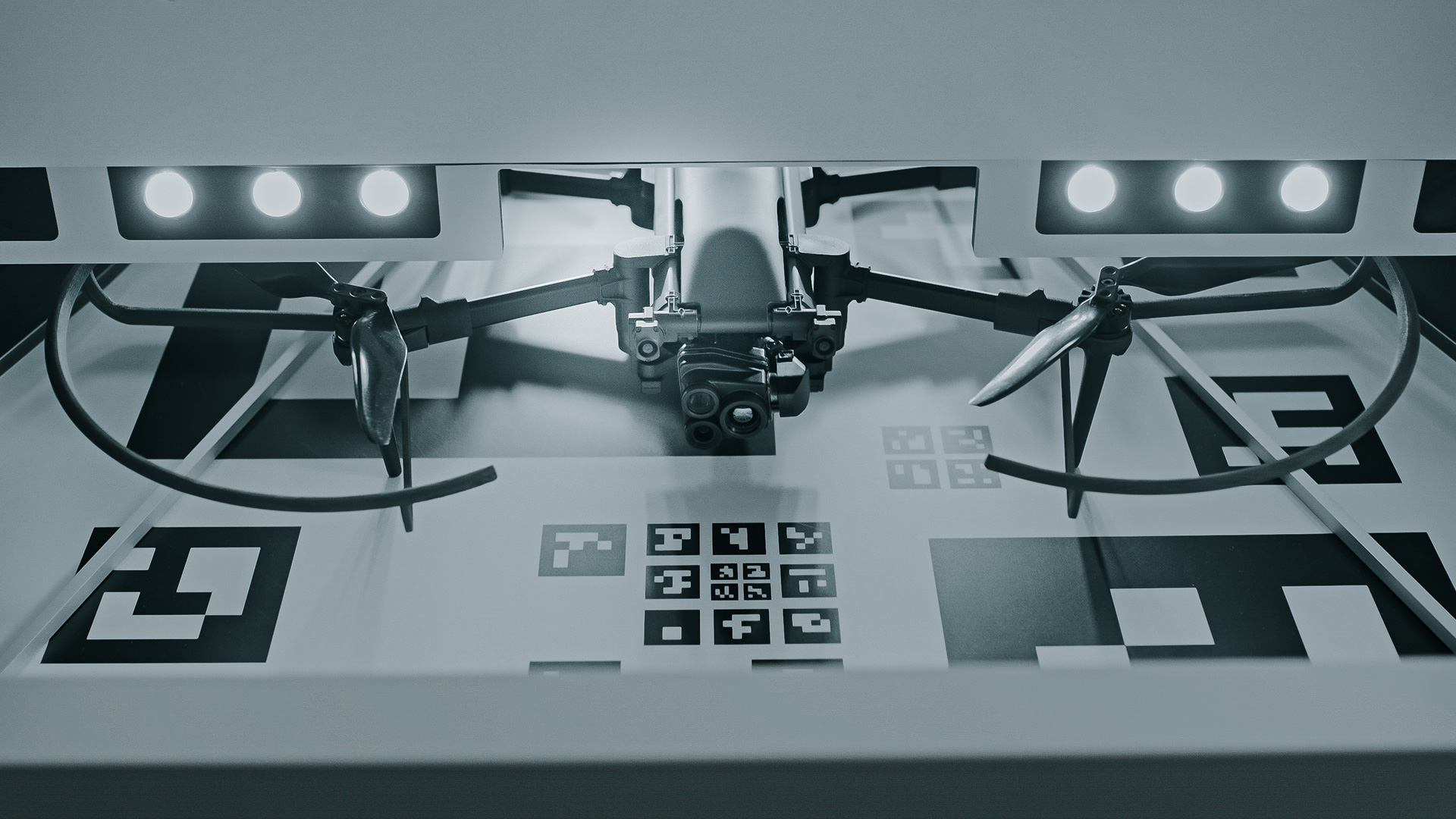
- Precision Landing System: Direct landing on the docking pad, day or night.
DBOX supports remote operations by allowing pilots to control the drone from remote locations with internet access. For agencies and enterprise teams managing distributed sites, this can help centralize oversight while supporting faster access to aerial visibility when a mission is needed.
What Are The Key DBOX PRT Specifications?
The DBOX PRT technical specifications identify the product name, compatible drone model, weight, dimensions, power, sensors, operating temperature, data transfer methods, network access, and supported software.
| Category | DBOX PRT specification |
| Docking station weight | ≈99 lb |
| Networking station weight | ≈20 lb |
| Docking station dimensions, closed | 33.9 × 32.3 × 23.6 in (L × W × H) |
| Docking station dimensions, opened | 63.8 × 32.3 × 23.6 in (L × W × H) |
| Sensors | Rain, wind, temperature, humidity |
| Operating temperature | -32.8° to 122° F |
| Data transfer from UAV | Physical USB, Wi-Fi, 5G |
| Supported software | DBOX GCS Ground Control Software |
Which Drones Are Compatible with DBOX PRT?
DBOX PRT is compatible with select Parrot platforms, including the Parrot Anafi UKR GOV. This aircraft includes Wi-Fi, LoRa, and 5G multi-link connectivity, an extended battery, up to 70 minutes of flight time, and a stated range of up to 24 miles.
How Drone Nerds Can Help
Drone Nerds helps organizations evaluate, deploy, and scale drone programs through hardware, software, training, repairs, maintenance, program guidance, kitting, financing, and ongoing operational support.
For DBOX, that support can be especially important because a docking station is not a simple hardware purchase. It requires decisions around use case design, aircraft selection, software configuration, site readiness, connectivity, training, maintenance, and long-term program support.
For public safety teams, government agencies, infrastructure operators, and security teams evaluating autonomous drone operations, Drone Nerds can help clarify:
- Whether DBOX fits the mission profile
- What software and data workflows need to be configured
- What training and support model is needed for long-term adoption
- How DBOX fits into a broader drone program roadmap
Final Thoughts
DBOX gives organizations a structured path toward remotely managed and automated aerial operations. With a fixed docking station, compatible with select Parrot platforms including the Parrot Anafi UKR GOV, mission software, automatic charging, data transfer, and real-time operational visibility, the platform is designed to support teams that need repeatable drone missions from known locations.
For public safety and government users, the value is not only automation. It is the ability to build a more consistent operational workflow around incident response, perimeter monitoring, search operations, infrastructure security, and command-center situational awareness.
Evaluating autonomous drone docking for public safety, government, infrastructure, or security operations? Speak with a Drone Nerds expert to review DBOX availability, configuration options, compatible aircraft, software workflows, training, and long-term support.
FAQs
What is DBOX?
DBOX is an autonomous drone docking station platform that supports remotely managed and automated drone operations.
Which drones are compatible with DBOX PRT?
DBOX PRT is compatible with select Parrot platforms, including the Parrot Anafi UKR GOV.
What use cases does DBOX support?
DBOX use cases include public safety, police operations, border security, critical infrastructure protection, perimeter monitoring, and remote asset monitoring.
Does DBOX support automatic charging?
Yes, the system automatically charges the battery between missions.
This blog is for informational purposes only and should not be considered legal or regulatory advice. Requirements can vary by organization, use case, and jurisdiction. Always verify current rules and procurement requirements before making a final decision.