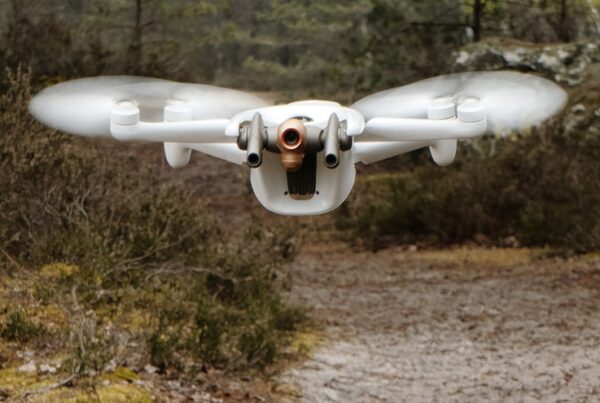
UAVs have advanced significantly over the last few years and constant innovation continues to facilitate their use in many applications—from search and rescue to inspections, agriculture, and even delivery. While drones bring significant benefits to many industries, one of the least mentioned capabilities is their ability to help us reduce our carbon footprint.
Many organizations have taken carbon-neutral or carbon-zero pledges in an effort to fight climate change, clean our air, and drive more environmentally ethical efforts. With sustainability in mind, organizations can leverage drones to achieve green efforts while enhancing their operations. Below are just a few ways drones are driving us to a greener future:
1) Drones in Agricultural Operations
Perhaps the most popular industry in which drones are supporting sustainability is agriculture. Not only do farmers use spray drones for chemical dispersion, but UAVs support aerial monitoring, which gives farmers greater control over their crops, especially when it comes to mapping land and identifying pests and diseases.
Because drones can determine soil conditions with various sensors, farmers can disperse precise amounts of soil additives, leading to more sustainable efforts. Ultimately, UAV dispersion prevents oversaturation and runoff. Since drones are battery-operated, they are a greener alternative vehicles that use diesel fuel.
2) Less Use of Fuel-Based Equipment
It’s no secret that helicopters are used for traffic monitoring, search and rescue, crop spraying, and a variety of other applications; however, helicopter use is costly and most of them run on jet fuel, which is a major atmospheric pollutant.
Drones can replace most helicopters in aerial operations— in public safety applications, powerful LiDAR and thermal sensors can help find victims, track suspects, and deliver medical supplies.
Payloads like CZI’s spotlights, broadcasting system, and emergency lights can equip drone fleets with the tools they need to replace most helicopter operations. This doesn’t mean that helicopters won’t be used at all—some operations will continue to require helicopters, especially when rescuing stranded hikers or transporting victims to hospitals, but it will lessen the number of operating hours–and jet fuel— that an organization needs.
Drone delivery can also lessen the use of motor vehicles in urban areas. Small package delivery seems like a possible solution for crowded highways and may result in a more affordable alternative for organizations.
Reducing the need for delivery vehicles will reduce carbon emissions, lessen traffic, and promote cleaner air in metropolitan areas.
3) Greenhouse Gas (GHGs) Mapping
New developments are constantly expanding UAV applications. The latest developments allow drones equipped with differential absorption LiDAR payloads to measure greenhouse gas emissions, like methane.
According to a study published by the American Chemical Society, there are methods involving both passive infrared (IR) background radiation and active (laser) remote sensing that use Eddy covariance (EC) to measure GHGs from agricultural soils, and methane (CH4) emissions from landfills. By determining concentrated areas of a particular greenhouse gas, scientists can identify hot spots and research what may be causing elevated temperatures in specific regions.
4) Fighting Against Deforestation
One of the world’s most prominent social and ethical issues involved combatting illegal deforestation; it is one of the largest contributors of GHG emissions. Posting security or guards in protected areas is costly, which leaves rainforests vulnerable to illegal logging. By the time authorities are notified, significant damage has already occurred and hundreds of acres have been decimated.
Drones are an affordable solution to fighting deforestation; UAVs are programmable and can be set to fly at different intervals within a specified waypoint area. Because drones can transmit live feeds to control centers, authorities can be notified quickly of suspicious activities.
Drones are changing the future—the benefit UAV programs offer are endless. They are affordable alternatives to traditional transportation and monitoring systems that help organizations scale while allowing them to pursue carbon-neutral initiatives.
For more information on how a drone program can help your organization, connect with our team at experts@dronenerds.com.