On April 2021, the Federal Aviation Administration (FAA) announced the implementation of Remote ID for drones flying in the national airspace. This new series of laws and protocols acknowledge the increasing use of UAVs, both commercial and recreational, and aims to fully integrate drones by establishing safety protocols. While these new changes won’t affect the way organizations use drones, it’s important to understand what Remote ID is.

Remote ID Explained
As an emerging technology, drones were previously unregulated; this quickly raised concerns regarding security and privacy, especially once drones became easily accessible to consumers and public organizations. In order to mitigate these concerns and identify legal precedence, Remote ID was established. For example, airplanes, helicopters, and other aircraft flying in Class A, B, and C airspace, or above 10,000 feet MSL must have transponders that communicate aircraft identification to air traffic controllers (ATC). Similar to this, drones must now have Remote ID which communicates crucial UAV information to other parties, including the identity, location, and altitude of the drone, and its control station or take-off location.
Remote ID helps law enforcement identify drones that appear to be flying in restricted areas, or in an unsafe manner. Remote ID also sets a blueprint for safety and security, which is needed for more complex drone operations.
How to Comply with Remote ID Requirements
Now that we know what Remote ID is, we can dive into the three different ways the FAA has listed for organizations, pilots, and general users to comply with the new protocol.
1. Operate a Standard Remote ID Drone: A Standard Remote ID drone comes with built-in remote ID broadcast capability. It reports on the following throughout the entire flight: the drone ID, location, altitude, velocity, control station location and elevation, time mark, and emergency status.
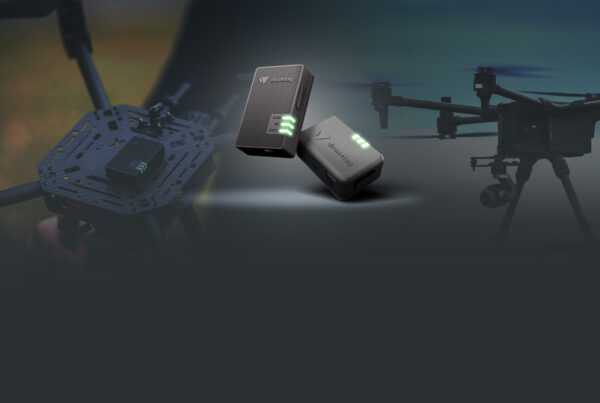
2. Operate a drone with a remote ID broadcast module: A broadcast module is a device that broadcasts identification and location information; it can be added to a drone that does not have a built-in remote broadcast unit. Pilots that use this method must be able to maintain a visual line of sight of their drone.
3. Operate (without remote ID equipment) at FAA-recognized identification areas (FRIAs):
These areas are sponsored by community organizations or educational institutions. According to the FAA, FRIAs are the only locations drones can operate without broadcasting a remote ID message.
Other Factors to Consider
Keep in mind that all drone pilots are now required to register their UAVs and must operate their drones in accordance with Remote ID regulations as of September 16, 2023.
If you are in the process of establishing a drone program and are concerned your drones will not satisfy this regulation, rest assured all manufacturers are required to comply with the FAA’s requirement of a built-in broadcasting unit by September 16, 2022. Some manufacturers may have already included this capability in their drones, but haven’t enabled or utilized the feature—we recommend confirming this based on your drone manufacturer and model.
If you have an existing drone fleet that does not have built-in transponders, you can purchase a module to retrofit your UAVs.
Our experts can help guide you through this transition and find a solution that fits your use case—contact our drone experts to get started.