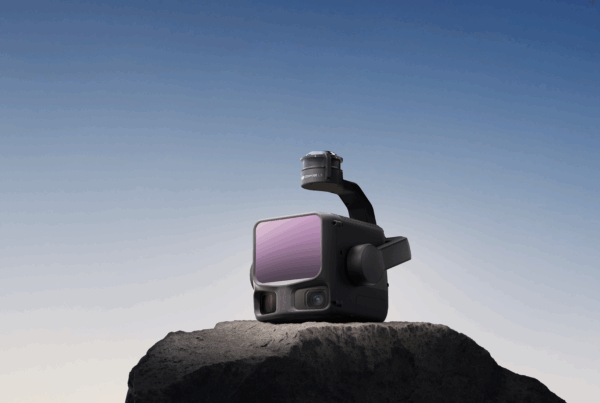
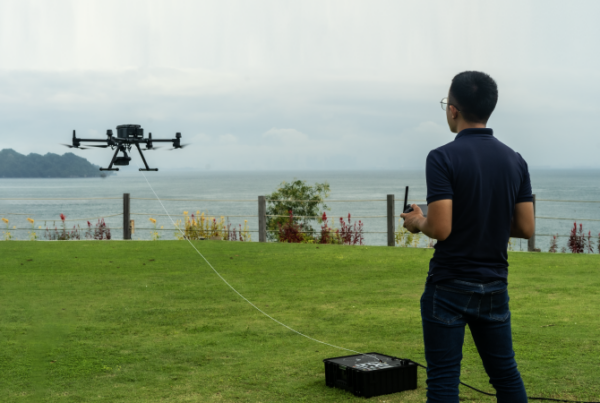
Drone technology has transformed the way energy professionals operate, monitor, and manage their assets. From oil rigs to wind farms, drones equipped with advanced features such as LiDAR, thermal sensors, and RTK capabilities have become indispensable tools, revolutionizing traditional practices and opening new possibilities for efficiency and innovation.
At its core, drone technology offers energy professionals unparalleled access and insights into their operations. Gone are the days of relying solely on ground-based surveys and manual inspections, which were not only time-consuming but also posed significant safety risks. Today, drones have become key companions, capable of flying over vast landscapes, navigating challenging structures, and capturing high-resolution data with precision and efficiency.
Discover how LiDAR, thermal sensors, and RTK are transforming the way energy companies survey, monitor, and manage their assets, leading to increased efficiency, safety, and cost savings.

Laser Precision: LiDAR’s Role in Revolutionizing Energy Missions
One of the key features that have propelled drones to the forefront of the energy industry is LiDAR technology. LiDAR, short for Light Detection and Ranging, utilizes laser pulses to measure distances and generate highly accurate 3D maps of terrain and infrastructure. For energy companies involved in pipeline inspection, LiDAR-equipped drones offer increased efficiency, allowing for rapid and comprehensive surveys of vast networks. Among its several applications, LiDAR enables detailed inspections of energy assets, including powerlines, wind turbines, and oil and gas infrastructure.
Infrared Insights: Harnessing Thermal Sensors in the Energy Industry
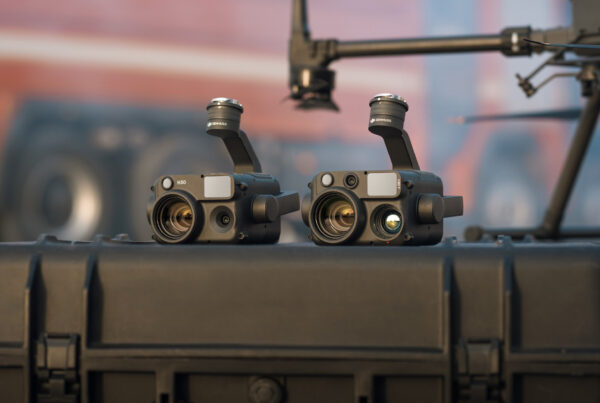
Thermal sensors, also known as infrared sensors, detect and measure the heat emitted by objects and surfaces, allowing them to capture temperature differentials with remarkable precision. Thermal cameras use specialized lenses that pick up infrared radiation (IR) frequencies, along with thermal sensors and image processors to render the results on a visual display.
In oil and gas facilities, for example, thermal sensors are used to monitor equipment such as storage tanks, pipelines, and flare stacks for leaks, corrosion, and insulation damage. Thermal sensors are also used to assess the performance of solar panels and detect issues such as cell defects, shading, and module mismatches. By capturing thermal imagery of solar arrays, drones identify malfunctioning panels and optimize energy production, enhancing the overall efficiency and profitability of solar farms.
Centimeter-Level Accuracy: The Importance of RTK in Energy Operations
Real-Time Kinematic (RTK) is a satellite navigation technique used to enhance the accuracy of positioning data collected by drones. By combining GPS data from a base station with corrections transmitted in real-time, RTK-enabled drones achieve centimeter-level positioning accuracy, making them valuable tools for precise mapping and asset inspection in the energy sector.
In wind turbine maintenance, for instance, RTK-enabled drones play a vital role in ensuring the operational integrity of wind farms. By conducting precise inspections of turbine blades, towers, and components, these drones facilitate early detection of defects and optimization of maintenance schedules. As a result, energy companies can minimize downtime and maximize energy production, contributing to the overall efficiency of wind energy generation.
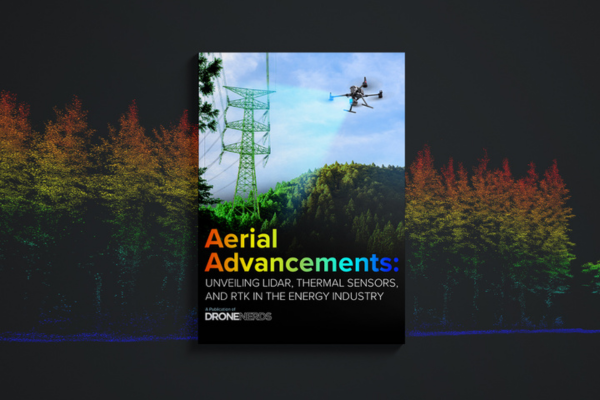
Want to learn more about the applications of LiDAR, thermal sensors, and RTK in the energy industry? Download our ebook to explore the fascinating world of drone technology and uncover its applications within the energy industry.